Examination update continues to improve the perception of professionalism for our industry
One of the over-riding priorities of the ARCSI is elevating the role of the house cleaning technician in the eyes of the public – a feat that will help to shift the consumer purchasing lens from price to value. In fact, anything and everything we can do to shift the focus from price to successful outcomes builds value for cleaning business brands that have a professional offering, where expertise and efficiency are not mutually exclusive.
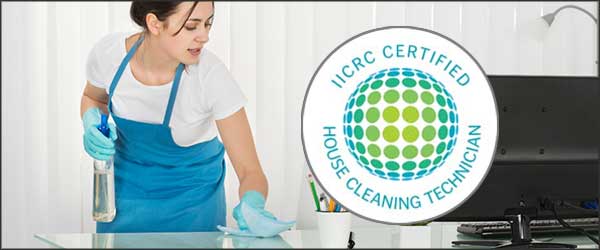
As cleaning business owners, one way to elevate our cleaning pros (and our businesses at the same time) is investing in master classes for our most valued employees. The House Cleaning Technician certification is a great example. HCT certification is governed by the IICRC (Institute of Inspection, Cleaning and Restoration Certification), an ANSI recognized developer of industry standards.
How the certified professional is different
The IICRC affiliation alone gives the HCT certification a gravitas that even the most comprehensive of local training programs can’t match. The requirement for certification is to pass a written exam that includes 160 questions gauging the candidate’s understanding of cleaning chemistry, tools, process, safety, surface composition and health considerations as well as their understanding of the role of a cleaning technician. A passing score identifies the cleaning professional as one who has superior proficiency in cleaning skills. This proficiency empowers them to efficiently assess cleaning challenges in the field and equips them to choose effective solutions that lead to positive outcomes and repeat customers.
The rigors of the exam should be stressed. While no formal certification training is required, most certificate candidates undergo a two day training course to prepare them for a successful score. Sure, your cleaning technicians are gaining street knowledge every day they’re on the job. But if the certification is to give you maximum value, the course ensures that the technician receives comprehensive preparation which spans field gaps where cleaning professionals have not yet encountered all scenarios in their practice.
What goes into exam prep
You may be thinking….ok, IICRC sounds pretty weighty, but how do I know that a passing grade signifies true mastery of skill?
Maintaining the exam’s relevance over time ensures that technicians are always up to speed on emerging technologies, chemistries and surface composition. Therefore the IICRC examination development process is quite rigorous. All evidence supporting a correct question response is fully vetted for accuracy and currency; the exam is updated every five years to ensure that only current information forms the basis of any question.
While under review, the House Cleaning Technician TAC (Technical Advisory Committee) re-evaluates the wording of each question to make sure it is neither leading nor misleading towards a correct answer. The committee checks all sources of evidence supporting the correct answer and updates as necessary when information changes. The committee also considers the balance of questions to make sure it is weighted in accordance with the overall body of material and pre-defined learning objectives.
The updating process is extensive and thus lengthy. The HCT TAC committee has been at work on and off for the better part of two years reviewing the existing test and updating accordingly. We have just finalized our recommendation and are awaiting review and approval by the IICRC. The review committee anticipates the updated exam will go live around the first of the year.
The HCT TAC committee includes a quite diverse mix of industry professionals that has provided a robust set of scrutiny and advice on how to maximize the value of the HCT exam. Current committee members include Bruce Vance, Sarah Vance, Tom Stewart, Janice Stewart, David Kiser, Joe Dobbins, Janet Dobbins, Lisa Winter, Liz Trotter, Steve Hanson, Rick Alston, Richard Wilson and Cloud Conrad.
As current vice-chair of the committed I would like to thank the aforementioned members for their time, energy and expertise. I would especially like to thank outgoing committee chair, Bruce Vance, for his passion and dedication to the process and to the successful outcomes that help more and more cleaning professionals make us all proud of the important work that we do helping customers’ maintain the clean and healthy environments they call home.
For more articles, subscribe to our newsletter!
FAQs
A: Retention improves when companies hire for fit, set clear expectations, train consistently, pay accurately, create predictable schedules, recognize good work, and address performance problems quickly. Turnover should be measured like any other business KPI.
A: Training should include cleaning procedures, safety, chemical use, customer communication, quality standards, time expectations, equipment care, and what to do when problems occur in a home or facility.
A: Attendance affects route reliability, customer trust, team morale, and profitability. A fair policy should define expectations, call-out procedures, consequences, and manager responsibilities while allowing consistent enforcement.