The launch comes as Lucid Bots’ connected fleet surpasses 8,760 cumulative flight hours — the equivalent of a full year in the air
CHARLOTTE, N.C., Sept. 1, 2026 /PRNewswire/ — Lucid Bots has announced the Power Tether, making it the first company to bring a ground-powered continuous-power system to commercial cleaning and spraying drones. The system supplies continuous external power to the Sherpa drone, reducing planned battery-change interruptions during longer cleaning and spraying operations. The announcement comes as Lucid Bots operators have recently recorded more than 8,760 cumulative flight hours; the equivalent of more than one full calendar year in the air.
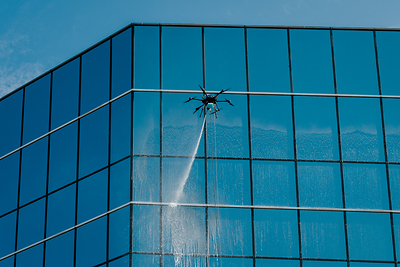
Measured through telemetry data as of August 17, the milestone aggregates airborne time across 600+ Sherpa drones. It represents cumulative activity across the network, not a single continuous flight and not exclusively Power Tether-powered flight.
Conventional battery operations require the drone to land periodically so crews can swap packs, relaunch and reacquire position. The Power Tether shifts the primary power source to the ground: its air module mounts in the Sherpa drone’s battery bay, while a ground station connects to a compatible generator. The result is a longer, steadier work session with fewer planned interruptions and less need to schedule the job around battery cycles.
Adoption data reflects the shift. Among customers who have logged more than an hour on the Power Tether, more than 90% of their flight time now runs on tether power, with batteries used for the remaining 10%. That split is a signal that once crews have the system on hand, they default to it for the bulk of the job.
“Those hours belong to our customers. A year in the air is a year of everyday businesses generating revenue and doing dangerous work faster and more safely,” said Andrew Ashur, Founder and CEO of Lucid Bots. “Too much of robotics has lived in the promise of headlines. This is customers on job sites building real companies and creating real value. The Power Tether also ends the old battery debate that has dominated our industry. Once customers try it, the data shows they don’t go back to swapping packs. Crews stay focused on the building instead of the battery clock.”
— Andrew Ashur, Founder and CEO of Lucid Bots
The Power Tether installs in less than 15 minutes on compatible Sherpa drone systems. Firmware monitors power draw in real time and alerts operators as they approach operating limits. If generator power is lost, onboard battery backup supports the system’s automatic landing sequence.
In a continuous-flight test at Lucid Bots headquarters, a Power Tether-equipped Sherpa drone remained airborne for eight hours and 48 seconds on one generator connection with no battery swaps.
The Power Tether is designed for commercial building-maintenance work where longer flight sessions help crews maintain job momentum, including exterior facade, window, hotel, institutional and distribution-center applications.
Product specifications, operating requirements and purchasing information are available at lucidbots.com/products/power-tether.
About Lucid Bots
Lucid Bots is a Charlotte, NC-based drone hardware company and the manufacturer of the Sherpa Drone, a purpose-built platform for exterior cleaning and protection applications. Backed by Y Combinator and $34 million in funding, Lucid Bots serves a network of 400+ operators across more than 40 states and three continents. The Sherpa Drone is designed and built in the USA and a distinct NDAA-compliant configuration is available. Learn more at lucidbots.com.
Contact: Abigail Steinberg | asteinberg@lucidbots.com
 View original content to download multimedia:https://www.prnewswire.com/news-releases/lucid-bots-launches-power-tether-the-cleaning-drone-industrys-first-ground-powered-continuous-flight-system-302866698.html
SOURCE Lucid Bots
FAQs
A: The Power Tether is a ground-powered continuous-flight system for the Lucid Bots Sherpa drone. Instead of running on battery packs that require periodic landing and swapping, the system draws power from a compatible generator on the ground via a tether. An air module mounts in the Sherpa's battery bay, and the drone can remain airborne for significantly longer work sessions — up to 8 hours and 48 seconds in Lucid Bots' own continuous-flight testing.
A: A standard cleaning drone must land periodically so crews can swap battery packs, re-launch, and reacquire position on the building. A tethered drone like the Sherpa with Power Tether shifts its primary power source to a generator on the ground, eliminating most planned interruptions. Among Lucid Bots customers who have logged more than an hour on the Power Tether, more than 90% of their flight time now runs on tether power.
A: The Power Tether is designed for commercial building-maintenance applications where longer, uninterrupted flight sessions matter most — including exterior facade cleaning, window washing, hotels, institutional buildings, and large distribution centers. It is not designed for residential home cleaning.
A: Lucid Bots says the Power Tether installs in less than 15 minutes on compatible Sherpa drone systems. Firmware monitors power draw in real time and alerts operators as they approach operating limits. If generator power is lost, onboard battery backup supports an automatic landing sequence.
A: Lucid Bots is a Charlotte, NC-based drone hardware company backed by Y Combinator with $34 million in funding. It manufactures the Sherpa Drone, a purpose-built platform for exterior cleaning and spraying. Its network includes 400+ operators across more than 40 states and three continents, and its connected fleet has now surpassed 8,760 cumulative flight hours — the equivalent of a full calendar year in the air.
A: Drone cleaning is primarily a commercial and facilities-maintenance play, not a residential one — the Sherpa is built for high-rise facades, hotel exteriors, and large commercial properties. For cleaning companies already serving commercial clients, drone capability can enable work that's otherwise dangerous, time-intensive, or equipment-heavy. It's a meaningful capital and training investment, so evaluating operator requirements, FAA Part 107 certification, and the size of your commercial client base matters before committing.
Author

Recommended Reading
We've rounded up a few related posts you might like.
Top of the list is How technology has had a positive impact on the cleaning industry, diving into robotics, automation, and the competitive advantage of tech adoption.
Finally, we'd suggest Megatrends, that unpacks the 2013 mindset around how robotics would fundamentally change commercial cleaning.